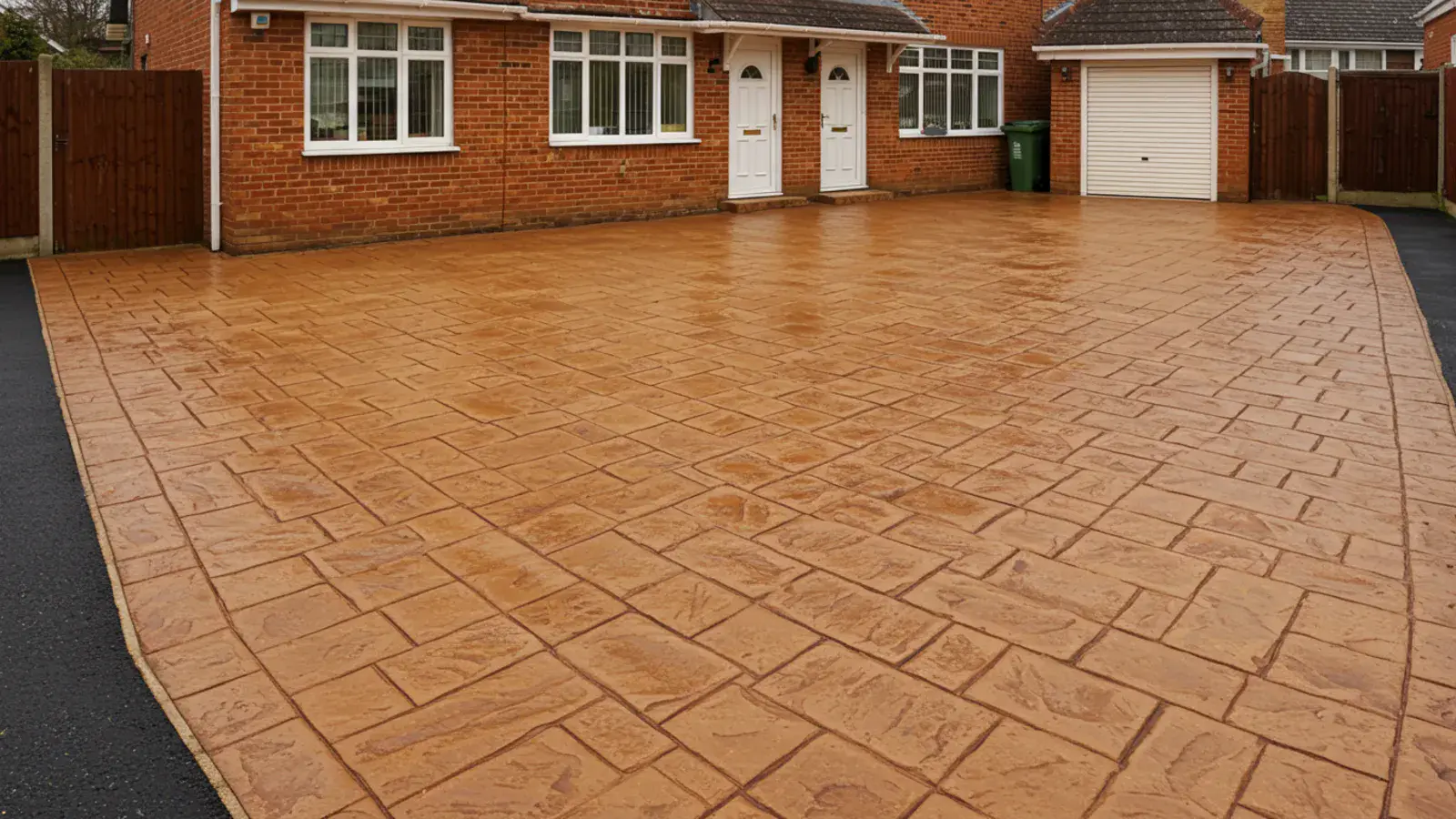
Imprinted concrete restoration in Normanton
Cleaning, sealing and recolouring for imprinted concrete drives in WF6, from the railway streets of Normanton to Altofts, Loscoe and Snydale.
Get a free Normanton quoteNormanton has always been a place where things come together: railway lines, the Calder to the north, coal seams beneath, and a good deal of low, flat ground in between. Its imprinted concrete drives share one overriding problem, which is water. If yours stays damp, goes green quickly or has a puddle that never quite clears, this page is written for you.
Railway streets, colliery estates and newer builds
Normanton grew around the railway and the coal mines, and the housing shows it: brick terraces close to the station and the centre, then estates of postwar and later homes spreading out. Loscoe and Snydale are largely later twentieth-century estate housing, and Altofts to the north has grown steadily around its older village core, with newer streets added over time.
The drives we are asked about tend to be the estate ones, laid between the late 1980s and the 2000s as part of a street-wide programme of upgrades. They are now at the age where the original sealer has long since worn off. If you are not sure when yours was done or what it is, our guide to telling imprinted concrete from block paving is a good place to begin.
Low ground and slow drainage
The Calder runs close to the north of Normanton and Altofts, and the land between there and the town is low and relatively flat. Water does not run away quickly on flat ground. Rain sits, and a drive that falls only slightly toward the road drains slowly even when nothing is wrong with it.
That matters more than almost any other local factor. A surface that stays wet is a surface algae can live on, and one that holds standing water is one where frost does real damage. Water enters unsealed concrete, freezes, expands and lifts fine flakes from the face. That is the pitting we see on drives with a long-gone seal, and how to tell scaling from a peeling sealer is set out in our guide. Before we seal a Normanton drive we look at where it holds water and whether the problem is the drive, the drain or the gully.
Green, black and slippery: what the damp does
A wet surface produces three different problems and they are often confused. Green film is algae, and it needs only moisture and a little light. Black speckling is a separate problem that is harder to shift the longer it stays. Both make an imprinted pattern dangerously slick. If your drive has become hazardous underfoot, our piece on what makes imprinted concrete slippery explains the three common causes and which one is yours.
Cleaning removes the growth, a treatment slows its return, and a fresh seal stops the surface soaking up water in the first place. All three matter. Stripping growth from an unsealed drive and leaving it bare simply gives the algae a head start.
Ground that moves, and cracks that matter
Normanton is a former coalfield town, and ground movement is a fair question to ask about any slab that has cracked. Most hairline cracks are shrinkage and harmless. A crack that is widening, that has one edge higher than the other, or that crosses a joint line, deserves a closer look. Our guide to which cracks in imprinted concrete matter is the reference. We fill and seal the ones that only need sealing and tell you plainly about the ones that do not.
How we work in WF6
We choose the day for the weather, because on low, damp ground a dry spell is worth waiting for. Our article on the best time of year to seal imprinted concrete explains the window. The work runs from cleaning to sealing, with recolouring where the colour has gone, and full restoration covers all of it.
We are based in Wakefield, a few miles up the road, and our pages for Pontefract and Stanley cover the neighbouring towns, as does our page for Castleford. Normanton assessments are free and come with no obligation.
Normanton and Altofts questions
- Which areas around Normanton do you cover?
- Normanton and the WF6 postcode, including Altofts, Loscoe and Snydale.
- Puddles sit on my drive for days after rain. Is the drive faulty?
- Not necessarily. Imprinted concrete is laid to a fall, but settlement, a blocked drain or a raised edge can leave a low spot. Standing water is what drives algae, slips and frost damage, so we check the falls before sealing, and we will tell you if a low spot needs dealing with first.
- Can you seal a drive that never seems to dry out?
- Only when it genuinely has. Sealer applied over moisture turns cloudy and white. We wait for a dry spell and check the surface before applying anything, which on a shaded or low-lying drive can mean a second visit.
Services for Normanton drives
Concrete Cleaning & Pressure Washing
Controlled pressure washing removes dirt, algae, moss and staining — safely restoring pattern imprinted concrete surfaces.
Normanton concrete cleaning & pressure washingConcrete Clear Sealing
Enhance colour and protect your surface with a clear seal — preventing fading, staining and water damage.
Normanton concrete clear sealingConcrete Recolouring
Restore heavily faded or worn concrete with full recolouring, delivering a consistent, like-new finish.
Normanton concrete recolouringConcrete Restoration & Protection
Complete restoration combining cleaning, sealing and protection to extend lifespan and improve appearance.
Normanton concrete restoration & protectionStanding water and green drives: sorted properly
Book a free look at your Normanton drive. We will check where the water goes as well as what the surface looks like.
Request your free quote