Slippery imprinted concrete: what causes it and how to make it safe
5 min read Concrete Revive
A slippery drive is a safety problem, not a cosmetic one. The cause is usually one of three things, and only one of them is the sealer.
Every winter we get calls about imprinted concrete that has become treacherous underfoot, usually after someone has had a near miss carrying shopping in. It is worth taking seriously, and it is worth diagnosing properly, because the three common causes need different answers.
Cause one: organic growth
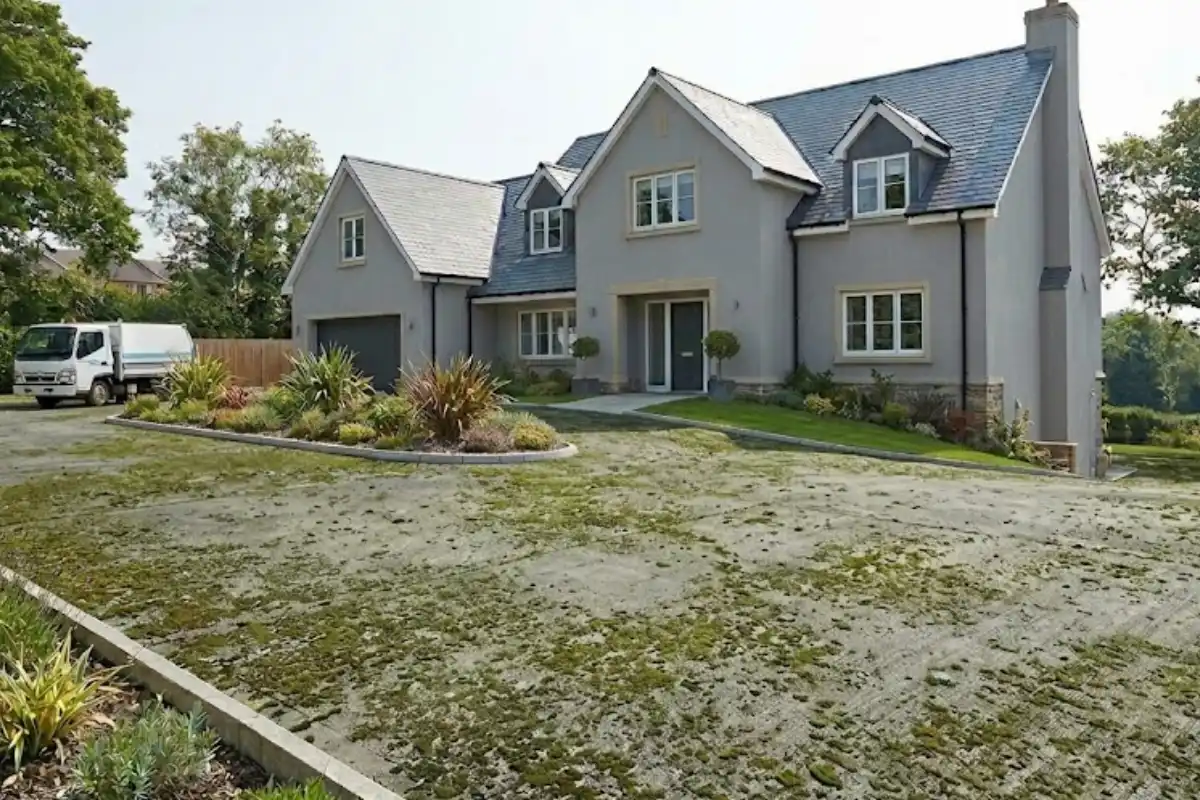
By some distance the most common. A thin film of algae is enough to make a hard surface genuinely dangerous when wet, and it does not need to look dramatic to be doing it. Black spot and moss compound the problem.
Growth concentrates where the surface stays damp — shaded strips, north-facing slopes, the edge against a hedge or fence, and anywhere water sits. If the slippery patches map onto the shaded and damp parts of your drive, this is almost certainly your answer.
The fix is a proper clean followed by a biocide treatment that kills the growth rather than just washing the visible layer off. Rinsing alone buys you a few weeks.
Cause two: the wrong sealer, or too much of it
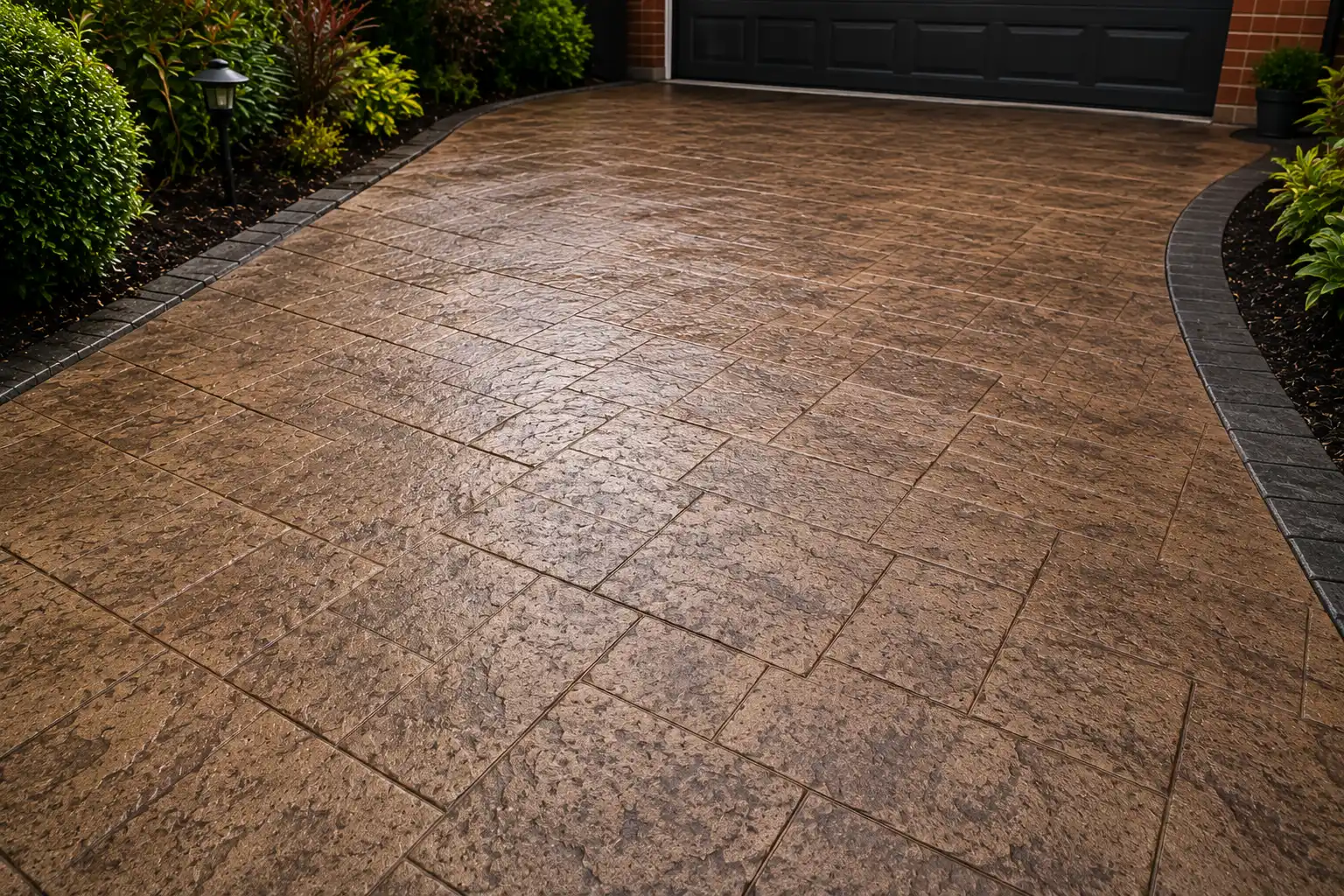
A high-gloss acrylic sealer applied heavily, with no anti-slip additive, produces a smooth film that is slick when wet. This is a workmanship issue rather than a fault with the concrete, and it is often obvious because the drive was noticeably more slippery immediately after it was last sealed.
The answer is to reseal with a fine aggregate anti-slip additive mixed into the sealer. It is invisible once applied and makes a substantial difference to grip. Any competent contractor will offer it; if you are getting an imprinted drive sealed and it is not mentioned, ask.
Cause three: standing water
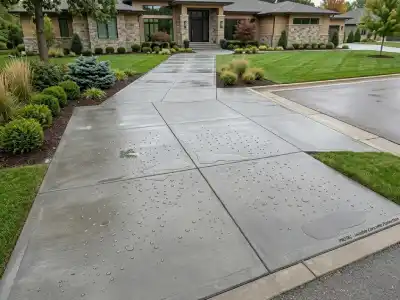
If water is pooling rather than draining, you get ice in winter and a permanently damp surface that grows algae the rest of the year. This is a falls and drainage problem, and no amount of sealing will solve it. It needs looking at properly — sometimes it is a blocked gully or a channel drain full of silt, which is a straightforward fix, and sometimes it is how the slab was laid, which is not.
What not to do
- Do not use salt heavily. Chlorides attack concrete and accelerate surface breakdown, particularly on an unsealed drive.
- Do not scour it with a wire brush. You will damage the surface and the scratches hold water and dirt, so it gets worse.
- Do not just add another coat of the same gloss sealer. If the sealer is the cause, more of it makes it slicker.
What a lasting fix looks like
On most drives it is a sequence rather than a single product: clean the surface properly, treat the growth so it does not come straight back, correct any drainage that is keeping it wet, then reseal with an anti-slip additive. Done together, that resolves the problem for years rather than months.
If your drive is slippery, it is worth getting looked at before winter rather than during it. We will tell you which of the three causes you actually have — it is usually clear within a few minutes on site — and quote for that rather than for everything.
Common questions
- Can anti-slip be added to imprinted concrete sealer?
- Yes. A fine aggregate additive is mixed into the sealer before application. It is invisible in the finished surface and substantially improves wet grip.
- Is a slippery drive caused by the sealer or by algae?
- Algae is the more common cause. If the slippery areas match the shaded, damp parts of the drive it is growth; if the whole surface became slick right after sealing, it is the sealer.
- Will salt damage my concrete drive?
- Used heavily, yes. Chlorides accelerate surface breakdown, especially where the sealer has worn away. Treating the growth and improving drainage is a better long-term answer.