Why pattern imprinted concrete fades — and what actually brings the colour back
7 min read Concrete Revive
Faded imprinted concrete is the most common call we get. The colour is rarely gone: in most cases it is buried under a failed seal, and that changes what the fix costs.
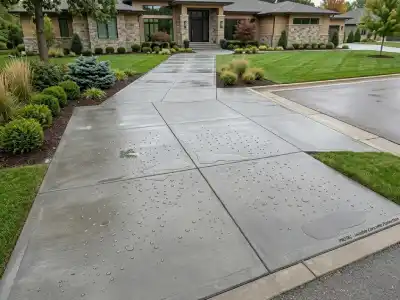
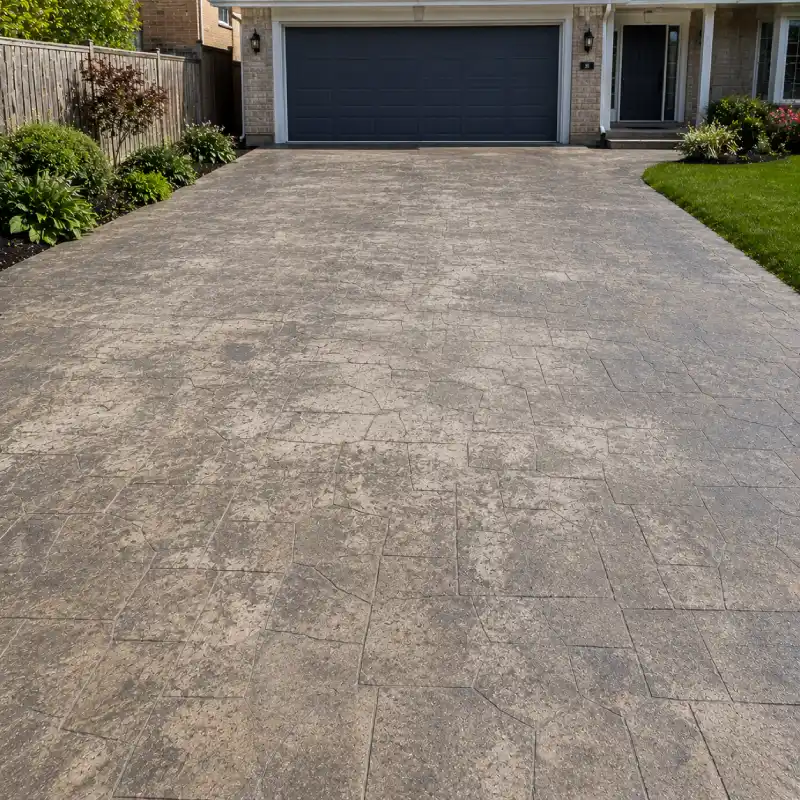
Pattern imprinted concrete is sold on how it looks, so when the colour flattens out after a few years it feels like the product has failed. Usually it has not. What has failed is the sealer sitting on top of it, and that is a much better problem to have.
How the colour is actually made
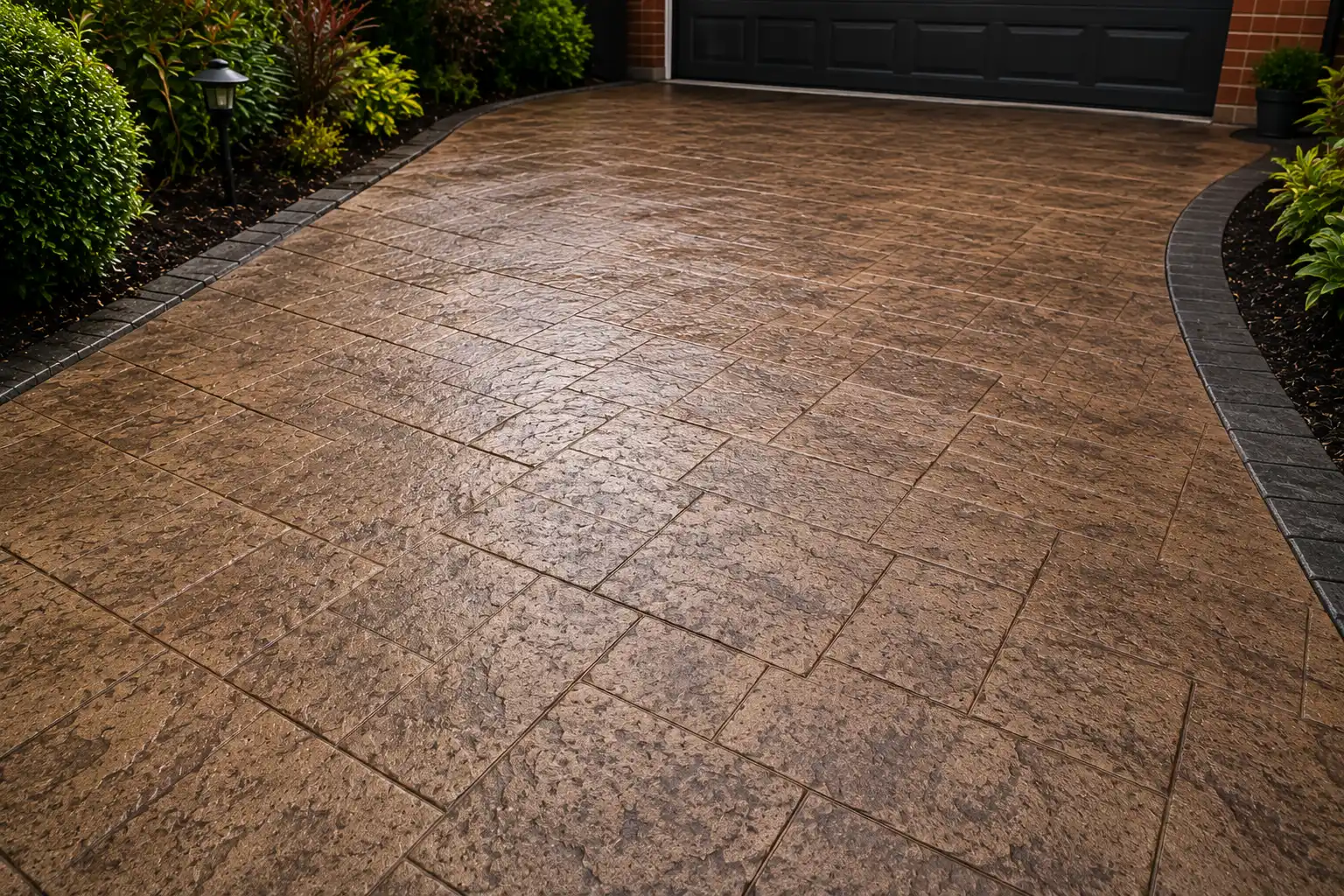
This matters, because it determines what can be recovered. Imprinted concrete gets its colour from two things applied while the slab is still wet: a dry shake colour hardener broadcast over the surface, and a release agent used to stop the patterned mats sticking. The hardener gives the base colour and a tough wearing surface; the release agent gives the secondary tone in the recesses that makes it read like stone rather than tinted concrete.
Both sit in the top few millimetres. Over that goes an acrylic sealer, and the sealer is what makes the colour look rich and slightly wet. Take the sealer away and the same concrete looks pale and chalky — even though not a scrap of pigment has gone anywhere.
Why it goes flat
The sealer has worn off
This is the answer the overwhelming majority of the time. Acrylic sealers are sacrificial. UV, rain, frost and tyres wear them down over roughly three to five years in this climate. As the sealer thins, the surface stops reflecting light the way it did and the colour reads as washed out. The pigment underneath is fine.
The sealer has gone cloudy or white
A milky, patchy bloom is moisture trapped under the sealer, not fading. It happens when a surface is sealed while damp, or when water is coming up from below because the slab lacks a membrane. Adding more sealer on top makes it worse, which is why this one needs diagnosing before anything is applied.
Organic growth is masking it
A green or black film across the surface dulls everything under it. Common on shaded sections and north-facing drives. It looks like fading and cleans off entirely.
Genuine surface loss
Less common, but real. If a drive has been repeatedly blasted at high pressure, the colour hardener layer itself can be eroded, exposing the plain grey concrete beneath. This is the one case where the colour genuinely has gone, and it is almost always self-inflicted.
Telling them apart yourself
There is a simple test. Pour a little clean water onto a dull area and look at it while it is wet.
- Colour comes back strongly while wet — the pigment is intact and the sealer has worn. A clean and reseal will restore it.
- It stays pale even when wet — the colour hardener has been worn through. That needs recolouring, not just sealing.
- Water sits on top in beads — the sealer is still working, so the problem is dirt or growth on the surface, not fading.
- The pale areas are white and patchy rather than uniform — suspect trapped moisture rather than wear.
What each fix involves
Clean and reseal is the standard job. The surface is cleaned at a controlled pressure, treated for organic growth, left to dry properly, and then resealed. Getting it fully dry first is not optional — sealing over moisture is exactly what causes the cloudy finish described above. The colour returns to something close to the day it was laid.
Recolouring is for surfaces where the hardener is worn through or where the owner wants a different colour. A pigmented coating system is applied to rebuild the colour, then sealed over. It is more involved and costs more, but it is still a fraction of replacing the slab, and it can rescue drives that look beyond help.
Keeping it
The single most useful habit is resealing on a sensible cycle rather than waiting until it looks bad — roughly every three to five years here, sooner on an exposed drive. Beyond that: keep leaves off it, do not let anyone attack it with a turbo nozzle, and rinse off spills reasonably promptly. Imprinted concrete that is resealed on schedule holds its appearance for decades. Left unsealed, it degrades for real, and then you are into the expensive fix.
Common questions
- Can faded imprinted concrete be restored?
- Nearly always. If the colour returns when the surface is wet, the pigment is intact and a clean and reseal will bring it back. Only worn-through colour hardener needs recolouring.
- Why has my imprinted concrete gone white and patchy?
- That is usually moisture trapped beneath the sealer rather than fading, caused by sealing a damp surface or water rising through the slab. It needs diagnosing before resealing.
- Does jet washing damage imprinted concrete?
- At high pressure with a narrow nozzle, yes. It erodes the colour hardener and the exposed grey concrete beneath cannot be sealed back to colour.