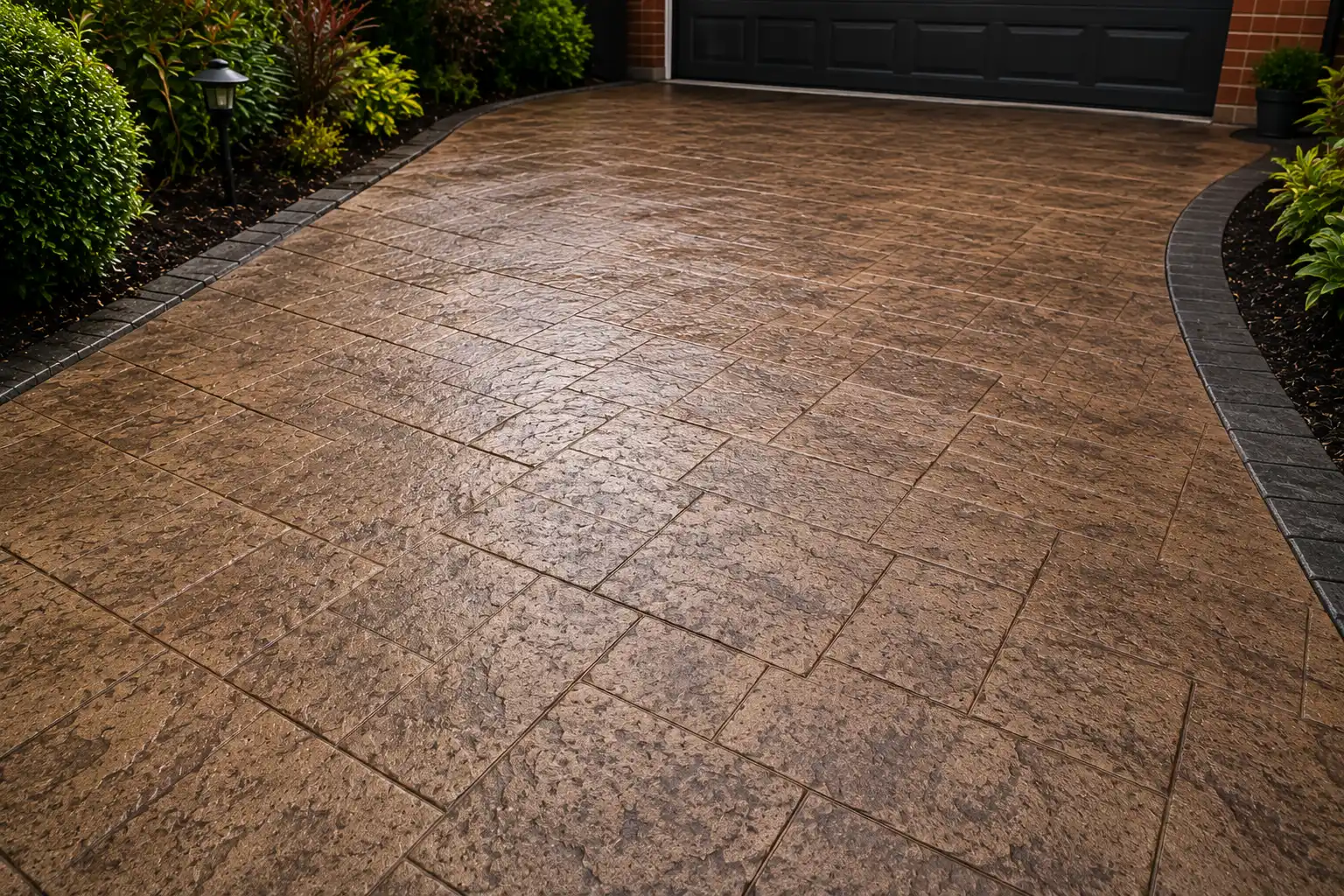
How often should imprinted concrete be resealed?
6 min read Concrete Revive
Resealing is the one job that decides whether a pattern imprinted drive lasts decades or degrades in a few years. The interval is shorter than most owners expect.
Most imprinted concrete drives we are called to have not been sealed since the day they were laid. Owners were often told it was maintenance-free, which is not quite what was meant: the concrete is durable, but the sealer on top of it is deliberately sacrificial and needs renewing.
The working interval
In this climate, every three to five years is the honest range for a domestic drive. Where in that range depends on what the surface takes:
- Nearer three years — south-facing and fully exposed, heavy vehicle use, turning circles, or a drive that gets gritted in winter.
- Nearer five years — sheltered, light foot traffic, a patio rather than a drive, or a surface kept clear of leaves and debris.
Commercial or high-traffic areas often want it more frequently. A first reseal is usually due sooner than owners expect, because the original coat put on at installation is thinner than a proper maintenance coat.
What the sealer is actually doing
It is easy to think of sealer as a gloss finish. It does more than that.
- It stops water getting in. Water in the surface freezes, expands, and breaks the top layer away. Frost damage on imprinted concrete is nearly always an unsealed-surface problem.
- It protects the colour layer. The hardener that carries the pigment is only a few millimetres deep. Once it is gone, it is gone.
- It resists staining. Oil, leaf tannin and general grime sit on a sealed surface instead of soaking into it.
- It holds the pattern crisp. Unsealed edges round off with wear and the imprint loses definition.
Skipping resealing does not simply mean a duller drive. It means the surface starts wearing for real, and repair is far more expensive than the maintenance would have been.
Signs it is due now
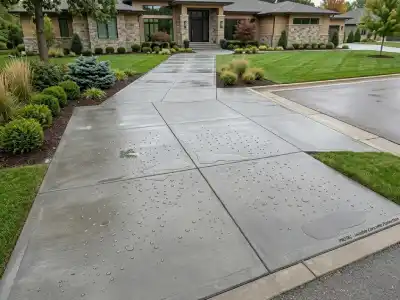
- Water soaks in and darkens the surface rather than beading on it.
- The colour looks flat and chalky when dry but rich when wet.
- The finish has gone matt where it used to have a slight sheen.
- Green or black growth is appearing and returning quickly.
- Fine surface dust comes away on a hand or a cloth.
The water test is the most reliable of these. If a splash soaks straight in, the sealer has stopped doing its job regardless of how the drive looks.
Doing it properly
A reseal is not just a fresh coat over whatever is there. The order matters:
- Clean the surface at a pressure matched to imprinted concrete, not the maximum the machine will give.
- Treat any moss, algae or black spot so it does not grow back through the new sealer.
- Make good any cracks or damaged sections.
- Let it dry thoroughly — this is the step most commonly rushed, and sealing over moisture is what produces a cloudy white finish.
- Apply the sealer in even coats, usually two, in suitable weather.
The common failures all come from shortcuts: sealing a damp surface, sealing over live organic growth, or using an aggressive clean that damages the colour layer before anything is applied. Whoever does it, those are the things worth asking about.
Common questions
- What happens if I never reseal imprinted concrete?
- Water penetrates the surface, frost breaks up the top layer, and the colour hardener wears through. At that point you need recolouring or repair rather than routine maintenance.
- How can I tell if the sealer has worn off?
- Splash clean water on it. If it soaks in and darkens the concrete rather than beading on the surface, the sealer has gone.
- Can imprinted concrete be sealed in any weather?
- No. The surface must be genuinely dry and conditions suitable. Sealing damp concrete traps moisture and produces a cloudy white finish that has to be stripped back.